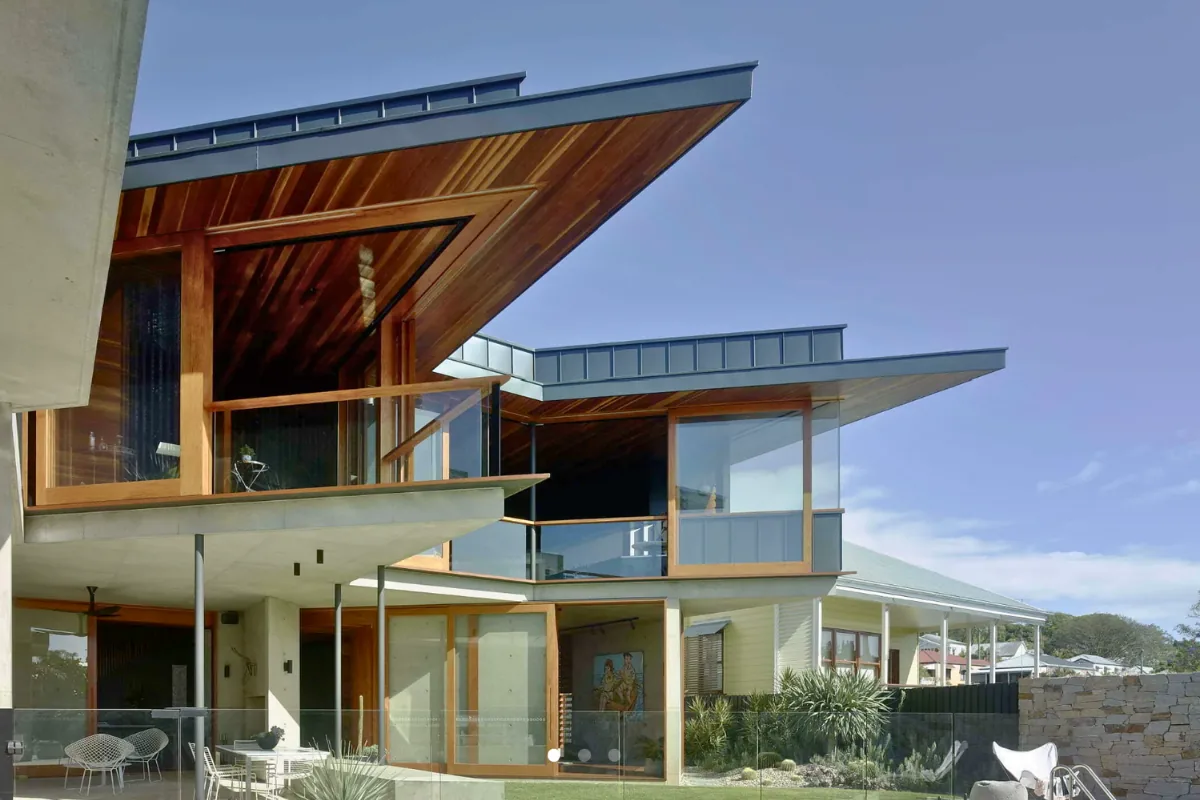
How Euroclad Zinc Roofing Contributes to Energy Efficiency
In a Queensland summer, your roof is the hardest-working surface on your entire build. It cops the full force of subtropical sun for eight hours a day — and what it does with that energy decides how hard your air-conditioning works for the next thirty years. Zinc, it turns out, is one of the smartest answers available.
Reflect first, absorb less
Natural and pre-weathered zinc surfaces reflect a significant share of incoming solar radiation rather than soaking it up. Lighter finishes such as VMZINC Natural and Quartz-Zinc perform particularly well, bouncing solar energy before it ever enters the roof assembly. Compare that with dark concrete tiles or aged asphalt surfaces, which can sit at 70–80°C on a summer afternoon, radiating stored heat into the home well into the evening.
Low thermal mass — fast cool-down
A standing seam zinc roof weighs around 5–7 kg/m² — a fraction of tiled roofing. That low thermal mass means the roof sheds its heat almost as soon as the sun drops, instead of storing it and releasing it into your ceiling space overnight. In practical terms: the air-conditioner stops fighting the roof at 9pm.
The ventilated assembly advantage
Euroclad installs zinc as part of a ventilated assembly — panels fixed over a structured underlay and battens that create a continuous air gap. That cavity works like a thermal break: air movement between the metal and the structure carries heat away before it reaches your insulation. The same cavity manages condensation, which is why properly detailed zinc roofs routinely outlast the buildings beneath them in Europe.
Efficiency that lasts 80 years
Energy performance only matters if it endures. Zinc's self-healing patina means the surface — and its reflective behaviour — is continuously renewed rather than degrading like painted finishes, which fade, chalk and absorb progressively more heat as they age. A VMZINC roof installed today will still be performing in 2100, with zero repainting and zero recoating. And at end of life, zinc is fully recyclable — most European zinc sheet already contains significant recycled content.
Designed and made on the Gold Coast
Every Euroclad zinc roof is shop-drawn in 3D, roll-formed in-house at our Coombabah facility and installed by our own teams. If you're weighing up roofing options for a new build or replacement, our material advisor can tell you in sixty seconds whether zinc suits your site — or talk to us directly about a thermal-performance-led specification.
Wondering which metal is right for your site? Answer three questions and find out.
Try the Material Advisor Talk to Euroclad